Sharpening
Establishing and maintaining an edge, with geometry and finishing suited to the blade and the work it will do.
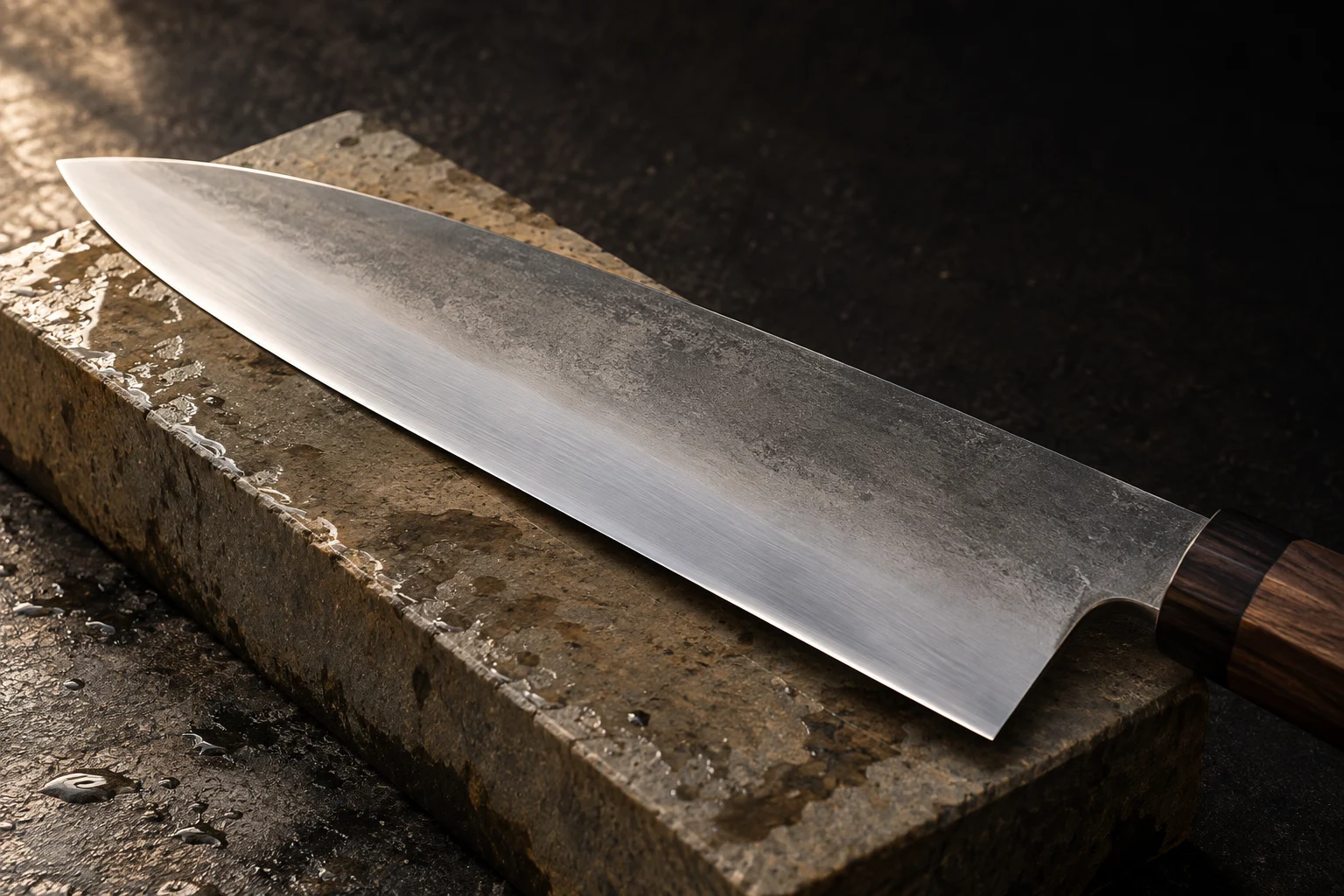
Sharpening and polishing
Japanese tradition, science and 32 years at the sharpening bench. Care informed by an understanding of what happens between steel and stone.
01The craft
Steel, geometry and intended use guide every decision. We begin by understanding what your tool needs to cut well again.
Establishing and maintaining an edge, with geometry and finishing suited to the blade and the work it will do.
Assessing thickness, wear and damage. The work is defined by the condition of the blade and the limits of its material.
Attention to surfaces, bevels and finish, respecting the construction and character of each blade.
Sharpening and polishing with close attention to delicate edge geometry and assessment for shaving.
How we work
Understand the blade, agree on the work and check the result. The care that guides the bench also informs the book.
How you use the blade and what you notice when cutting.
The edge, the geometry and the condition of the blade.
The agreed work, using suitable abrasives and technique.
The result and the care needed during use.
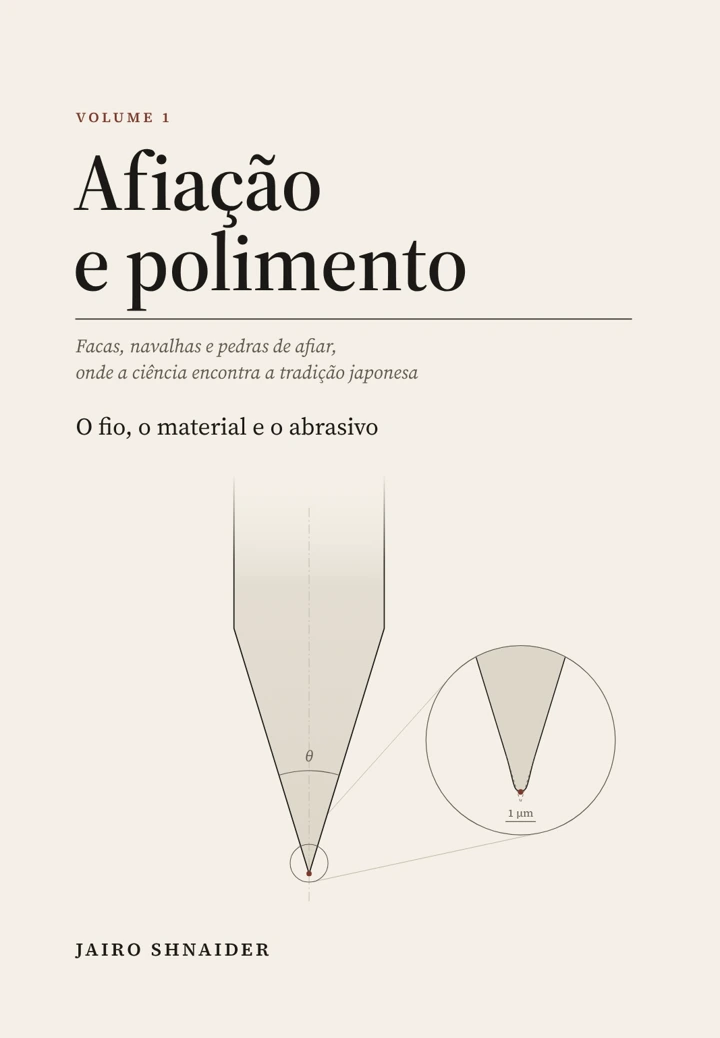
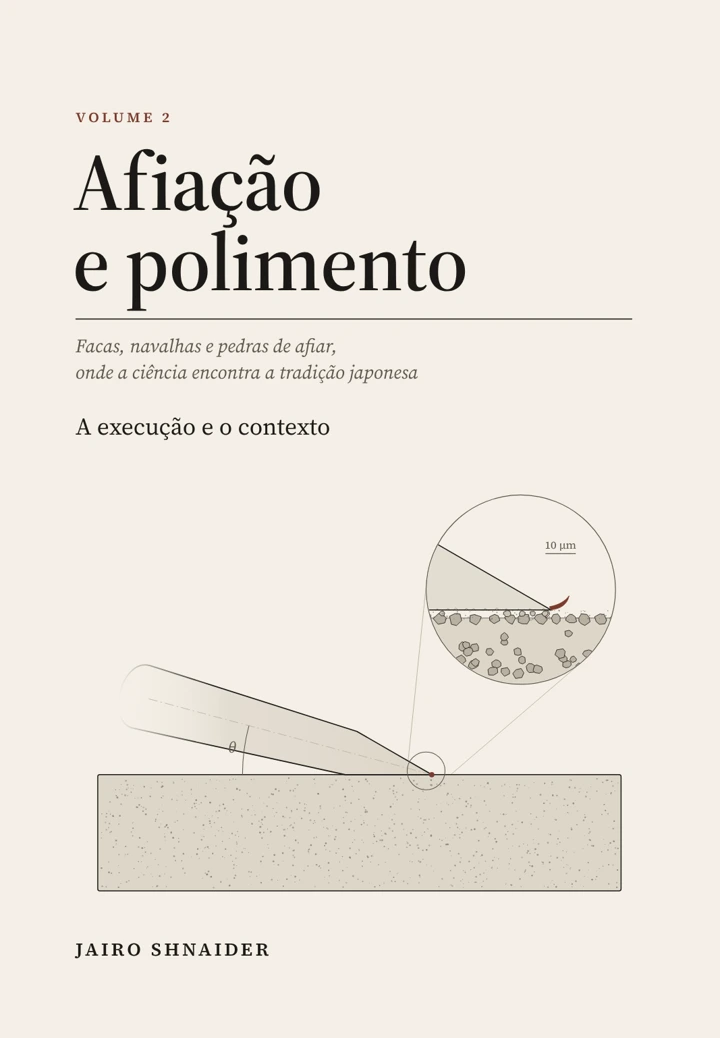
Two volumes. An investigation into cutting.
02The book by Jairo Shnaider
Sharpening and Polishing
Knives, straight razors and sharpening stones, where science meets Japanese tradition.
Book written in PortugueseA two-volume work bringing together hands-on experience, metallurgy, cutting mechanics, abrasives and Japanese sharpening and polishing traditions.
For readers who want to understand why a technique works, recognize the limits of a claim and make better-informed decisions at the bench.
What sharpness means; how cutting works; steels, geometry and wear; natural and synthetic stones; grit sizes and abrasives.
Assessment and preparation, knife and razor sharpening, polishing, Japanese tradition, professional practice, protocols and a practical guide.
03The person at the bench

Before we talk
Describe what you notice when cutting and share photographs of the blade and edge. This helps the initial conversation; examining the blade determines the scope of the work.
It depends on the damage, the remaining material and the blade's construction. The possibilities and limits of restoration need to be assessed before any work begins.
Contact Shinken with your city, the type of blade and the work you have in mind. Pricing and service arrangements are agreed directly with Shinken.
The book is written in Portuguese, primarily for professionals and experienced enthusiasts, with technical terms explained. It also provides a beginner's reading path, practical sections and a guide to support study.
Contact Shinken
Tell us about your tool or ask about the book. The conversation starts with what you need.
Prefer to write directly?
shinkenknivesil@gmail.com